

100 words a day

Project Start-Up
Even in the structured, staid, sometimes same-as-it-ever-was field of infrastructure engineering, there seems to be regular occurrences of project start-up frenzy. There is never enough time at the beginning of a project to start it up ‘right’.
Project kick-off is always time-poor; the pressure and rush at project start-up will never change. Therefore, processes and procedures must be versatile and flexible in order to allow quick ramp up. It’s like they say: if you keep doing the same thing, you’ll get the same result each time.
That works in the positive as well. So, utilise repeatable, robust and reliable procedures.

Assumed abilities
A university or college degree, or any certification, gives a certain level of “confirmed competence” or “assumed abilities”. The qualification is third-party validation around that person’s capabilities.
Someone else – some other institution – has judged the credential-holder to be competent. The other party has determined that the holder is able to do the credentialed kind of thinking or problem-solving. That third-party validation is part of the value of the degree or credential. In some roles or industries, specific credentials are less important. But in the built environment, the opposite is true: a level of competence is assumed and should be expected.

Character v Personality
In Susan Cain’s book “Quiet”, the astute observation was made, that the culture of character (serious, disciplined, honourable) has lost out to the culture of personality (bold, entertaining, dominant). The book also addressed the yin/yang of introverts and extroverts, noting that personality is like a rubber band — elastic and changeable, but only to a point.
There was a time, not long ago, that attributes such as citizenship, honour and reputation were recognised and appreciated. Now it is all about being fascinating, stunning, and magnetic.
So, manoeuvring through the expectations and preferences of colleagues, friends and family requires awareness of self.

Hello
Back in March, during Australia’s initial lockdown, we were confined to our suburbs and would only leave the house for a few reasons: exercise, work, school, groceries and maybe caretaking. Brisbane has not re-entered lockdown, but our Melbourne friends have.
It was an eerie time, back then. But I also realised today, while out walking, that during that time, we as a neighbourhood went out of our way to say hello to each other. And, ironically, we saw our neighbours more often then, than we do now.
It was an odd positive out of a negative, which we’ve lost again.

Known For / Known Self
To describe yourself or who you are, there are two things that prevail. Picture them as 'facing in', or 'facing out'.
The 'facing out' part is what others see: your title(s), labels, category, discipline or specialty, expert or generalist. These are the answers to "what do you do?” and would also be indicated by what you're "known for".
The other aspect, 'facing in', is what you see in yourself: what characteristics, interests, passions, innate skills, personality, aptitudes and attitudes that make you, you. These are your "known self".
So, together, the 'known for' and 'known self' define who we are.

Risk + Quality
The need for a business — and / or a person — to manage risk and quality is ever-present. Just about every task, every decision, every activity, has outcomes that are tied to risk, and to quality. A financial or costing decision has risk attached to it; a design calculation or drawing has both risk and quality associated with it.
If we are removed from the consequences of our decisions or actions, the connection to risk and quality are lost as well. To stay connected to risk, quality, and consequences, retain direct and obvious ownership of responsibility for the documents and records.

Uncertainty Antidote
Uncertainty avoidance is a phenomenon originated by G. Hofstede, describing the level of stress experienced when faced with uncertainty or ambiguity. It was originally developed to apply to cultures or organisations.
In the knowledge workplace, particularly a technical or hazardous one, uncertainty and ambiguity are generally not welcome.
The alternative is to look for the predictable. Being predictable is the antidote to uncertainty. In the hazardous work environment, having standard work processes, which are executed in a disciplined manner, delivers predictable results.
Consistent use of proven best practises delivers good results. And being predictable like that, reduces or eliminates uncertainty.

Other People’s Writing
By the time a new graduate is a year into their first job, particularly in a knowledge industry like engineering, it’s quite likely they have been asked to review several documents, specifications, or design drawings, that were written by or prepared by others.
As that worker advances, there is no slowing down of those requests. The requirement or request to review other people’s writings only increase with experience.
And yet, there is rarely a clear understanding given by the requester, or communicated by the reviewer, about what the expected specific outputs are in this ever-so-common exchange in the knowledge workplace.

Training
"Need more training" seems to be a default answer when a worker finds themselves with a perceived lack of knowledge, or having made a mistake, or not knowing what to do 'next'. While not wrong, a follow up question should then be, “what does it look like when you’re trained?”
Training is isolation does not guarantee change. Training to individuals is a temporary fix but is not always permanent. For training to stick, the trainee should also be obligated to either tell someone else what they’ve learned, or, should prove that they’ve used the knowledge soon after the training session.

Here’s the Advantage
As observed by Cal Newport in his book “Deep Work”, three groups will have a particular advantage in the future: those with access to capital; those who can work well and creatively with intelligent machines; and, those who are best at what they do.
So: if you are born into or come into money, or, if you are comfortable with the influx of machines and AI, you will be okay.
Alternatively, and perhaps more satisfying, is to be very good at what you do, and, able to communicate it. Additionally, be able to learn new and complex things very quickly.

“Free!”
There is a view that information should be free. It practically is anyway; we can Google just about anything.
Technical standards, like those produced by Standards Australia, currently face a difficult business model with that expectation of free. While they are not a money-making factory – not in it to make a dollar, they are in it to make a difference – there is a tension between freely available and open access, and the costs of that availability.
A fundamental requirement for technical standards is that we can undeniably trust the content. It’s a cost of doing business in a technical field.

Knowledge Transfer
Progression in work or career requires the ability to transfer knowledge to new situations. David Epstein, in his book “Range”, identifies that having a wide range of exposures to different situations and problem-solving experiences is superior to being able to do one thing really well.
Be able to take your knowledge and apply it to new or different situations. Problem-solving in complex and unpredictable fields relies on bespoke thinking and a wide range of options. Repetition of a task does not predict the ability to solve complex problems. Practise is important, but the breadth of training predicts breadth of the transfer.
Know What You Know
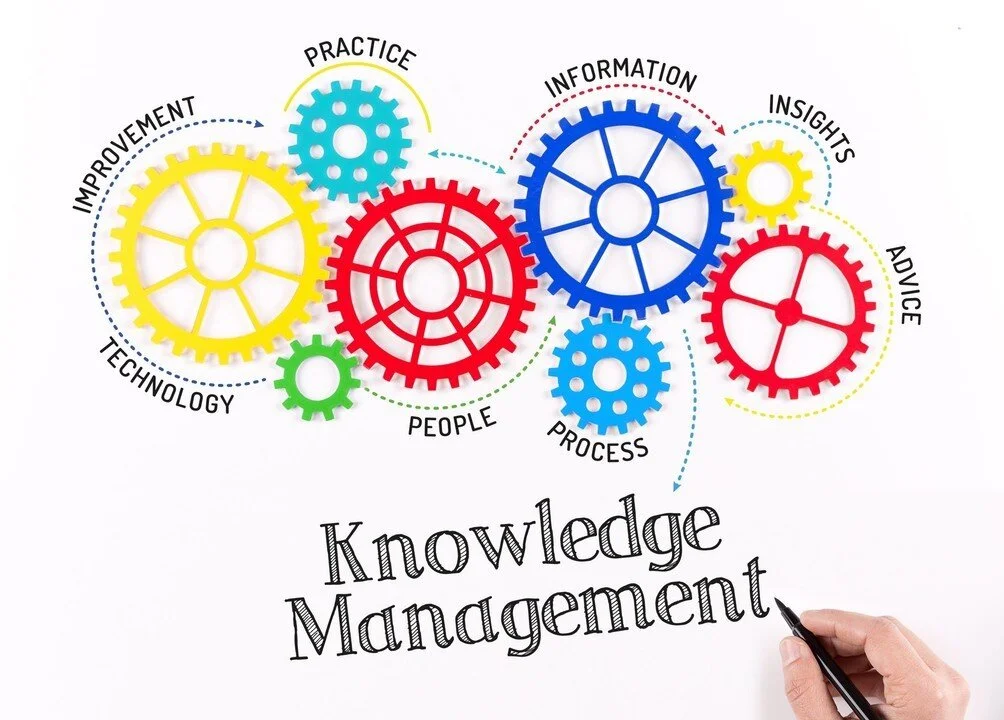
“Knowledge Management” (KM) for organisations is an established arena. Businesses can catalogue and track the implicit knowledge of their workers using (blackbox) software. There has also been an influx of methods for managing, capturing, and utilising “lessons learned”.
The ideas around KM for businesses are well developed and “google-able”. There are consultants and books and software programs available for that.
For knowledge workers, knowledge management is almost crucial to progress. Knowledge management for individuals should be a standard part of our day: a default activity managing our own knowledge.
No matter where you go, they can’t take your knowledge away.

Information and Documentation
Documentation and records for knowledge work must be useful, concise (where required), accurate, and most importantly, used. Documentation and records have several aspects to be considered: purpose, audience, usage, content, detail level, length, structure, source, history, future, lifecycle, outcome, and approval requirements. It’s too easy to “start a document” without thinking through the aspects listed above. Plan the document and its lifecycle, before starting it. Otherwise you have a pile of puzzle pieces without knowing what the finished picture looks like. There are too many unfinished, unapproved, and unused documents out there already. Start writing with the finish in mind.

Competency, Context, and Personality
The book “Atomic Habits” by James Clear outlines handy ways to develop good habits, and break bad habits. Towards the back of the book are some gems about competency, context, and personality. Competence is highly dependent on the context (i.e. topic or circumstance or situation). This can be extended to dependence on personality too, by definition of who you are and what you like. Boiling water softens a potato, but hardens an egg. So the effects of boiling water are different depending on the circumstance. Similarly, defining your competence is entirely dependent on the depth of the topic being queried.

Levels of Competence
One way of considering competence is by determining what level your knowledge is at on a topic. This can be graded by 1. Read, 2. Write or 3. Teach. A person with “read” level can read or review a document about the topic, and know if it is correct or contradictory to other information. So there is familiarity and recognition, but not deep or extensive knowledge. A person with “write” level can write the document, report, or specification. This would also include, in technical industries, the relevant calculations. The “teach” level can, as it implies, teach others about the topic.
How to “Get Competent”?
Competency in knowledge work, like engineering, is a hot topic. We live in a built environment, and when things go wrong a legitimate question is, whether those involved were competent at their job. Competency has been defined as having the right knowledge, skills and experience in a task or topic. There are numerous attempts at describing what is needed to be competent in specialist areas (engineering in general, pipeline engineering or systems engineering specifically). But sometimes these frameworks fall short of telling a person who wants to get competent, what to do next, to attain that knowledge, skills and experience.

Credibility Beyond Credentials
Credibility is awarded by the receiver of information, to the communicator. In other words, a person can’t simply declare they are credible (that would backfire) – in the end, it is up to the recipient to decide.
An accepted method of ‘declaring’ credibility is through credentials – degrees, awards, titles.
Training and schooling (i.e., engineering credentials) are important, but with the freeing up of information, with many solutions ‘google-able”, and some credentials easily achieved, credibility is not solely dependent on that credential anymore. Credibility is agnostic to a role or organisation. It’s up to individuals to display credibility through actions and behaviour.

Competence/Credibility
Competence and credibility are similar. In a world that moves faster every day, and in a world that needs everything to get easier and to take less time, it is getting harder to determine someone’s competence for the task to be done. “Competence” has been defined as having knowledge, skills and experience on a task or topic. More tangibly, these aspects can be described as having evidence of: outputs (pictures and words), interactions (having spoken to or otherwise interacted with others), and stories (what other people say about you and the topic). And if competency is established, credibility should follow.

100 Words a Day
“100 words a day” sounds just like it’s written, and probably doesn’t need explanation. It appeals because it represents enough words to get a thought out there, but it’s not too many words to be daunting every day. Except Saturday. No 100WADs on Saturdays around here.
The fun and challenge of #100wordsaday is after the writing of a couple of paragraphs, the next step is to go back to edit down (or up) to the exacting requirement of 100 words. It tests editing skills, and has forced the deletion of extraneous words, and also the addition of another adjective sometimes.