

100 words a day

Attribute with Honor
I read a lot, and then if it’s thought-provoking, I re-write it in my own words. Quite a bit of that ends up here, and by the time it’s part of this 100 words-a-day caper, it’s a mish-mash of my and others’ thoughts, and so I don’t specifically attribute the inspiration for the topic or thought.
I like the idea that we can stand on the shoulders of giants, by building on others’ thinking.
I do attribute the pictures I use, though. Almost all of them are from Unsplash, and I always credit the photo in the “alternative text” metadata.

Work in Summary
There’s a need for the executive summary for long reports, for the ‘dot points’ presented in a slide deck, and even the current phenomenon of book summaries.
There’s a need for those summaries, and the getting to the point. I’m all for it.
But we can’t all work in summaries. We can’t start with, and then only stick with, the dot points and think we understand it deeply.
Someone has to write the book, write the report, or prepare the input data for the slide deck.
Working in summary should always recognise the effort that came before the dot points.

Pro/Con
That title is wordplay. It’s actually “prose” and “cons” I’m thinking about today. And that’s not a typo – because it’s prose and conversations which are on my mind at the moment.
“Prose” is written or spoken language in its simplest state. It is our language without flourishes like the structured stanzas of poetry, and so it is what we use every day for communicating. We rarely have conversations in poetry: we speak in prose.
I remember a while ago, though, after enjoying a Shakespeare festival event, I did find myself thinking in iambic pentameters for the rest of the evening.

Feedback
In the business sense, feedback is recognised as an important ingredient for performance management. It is a key management responsibility to give feedback. There is an expected skill, also, to be able to receive feedback.
It is possible, though, in some workplaces, to go for many months or even years without receiving constructive opinions on your work. This can happen if there isn’t a culture of discussion, or if there is a reticence to openly give or receive pointers.
But it’s also pretty obvious that the best way to improve skills, or confirm knowledge, is to seek input from others.

The
Until I read a whole (long) article dedicated to the word “the” itself, it never would have occurred to me how important it is. The example given of its important was comparing “she scored a goal” to “she scored the goal”.
Words in the English language have one of two purposes: either having a meaning, or being a functional word like ‘the’, or ‘for’. Functional words are descriptive, without being an adjective.
I’m not a grammar specialist, but understanding basic rules certainly helps with business writing. But I wouldn’t have predicted that I’d find an article about “the” so interesting.

Workflow
Reliable workflows are a good goal to have. The certainty of a known workflow reduces stress in the workplace.
With known task assignment, known expectations of timing for each task, and the understanding of what happens next, things go smoothly. When a workflow process is well established, or often repeated, there is usually no uncertainty about who does what next, and how long it will take.
Bringing in innovation, or a new system, puts all of that structure and reliability into turmoil. Workflow assignment and expectations are not what they used to be.
The previous workflow probably doesn’t work anymore.

Clock-Watcher
I have willingly named myself a clock-watcher.
A generation ago, and maybe even more recently, this would be a very negative declaration. A person who repeatedly looks to see what time it is, is probably not doing it to be positive. It implies lack of interest and maybe “a desire to stop work as soon as the clock strikes a designated time”.
But I say we need more clock-watchers. With the plethora of onscreen meetings, I think others may actually appreciate it.
Because when meetings or seminars or training sessions run beyond the designated finish time, that’s not positive either.
Details
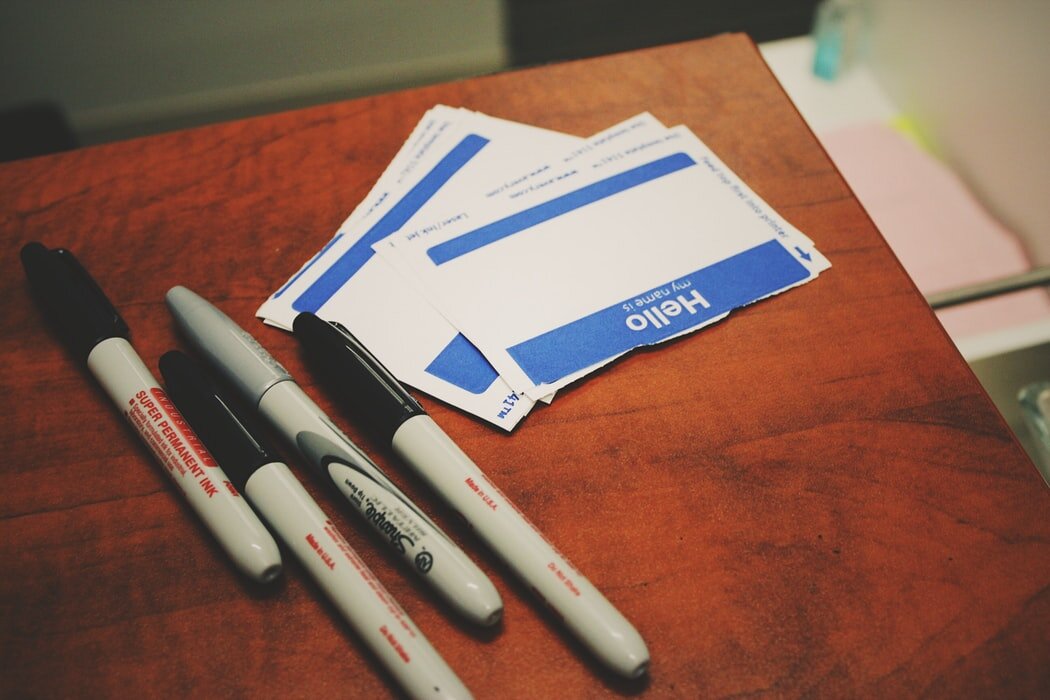
With Brisbane not in lockdown (sorry, Melbourne), we can socialise at establishments, but they are required to collect contact details.
I’ve experienced four different methods: a separate slip of paper; a sign-in book (with everybody else’s details visible), a Q-code to enter details; and, the greeter tapping into the computer.
The requirement to gather data was outcome-based, not prescriptive: gather the data, without any rules as to how.
For all these methods, I don’t know what happens to my details after I’ve left.
For all the good it’s doing, the old adage is true: the devil is in the details.

Chess
The other day I had the opportunity to play chess with a couple of school children, aged 10 and 7. I was so impressed with their understanding of the game. It was even possible to lose to them. Never mind that last year when we played, I did.
To win, the ability to think strategically is, of course, a key skill in chess.
It’s crucial to have deep ability to think ahead, assess consequences, and be sensitive to what another person is thinking and planning to do.
Sounds like key skills any manager or leader should be very good at.

Review
Reviewing documents or designs is an integral part of the job for many professionals.
I remember in my early days, being shown how to review a design drawing. I was basically told to ‘just look for stuff that doesn’t look right’. And then I had to get on with it. And so, I did.
Review of reports is similar, with even less guidance given on what to look for. And yet, the reviewer has a certain level of responsibility.
There is an interesting responsibility trap with reviews; and the performance of the actual task is rarely clearly taught to us.

Resources
Project resources are assigned to solve problems.
Sometimes throwing more resources at problems might help solve them faster. More hands, more eyes, more brains on a task can unlock a bottleneck.
Then again, throwing more at a problem doesn’t always speed things up.
I heard recently an acquaintance is pregnant; it reminded me of a project management quip about adding resources to solve a problem:
It takes nine months to make a baby, typically involving one woman and one man. If you’re in a rush, involving nine men, or nine women, doesn’t mean it will be done in a month.

Fluid/Crystallised
Consider intelligence in two frames: fluid or crystallised.
Fluid intelligence is ‘idea-generating’, while crystallised intelligence is “making links and using knowledge” rather than creating it.
People with experience (i.e. age) use crystallised intelligence to improve the known. For example, salespeople hone their pitch, or government workers get through red tape.
Our brain is a library accumulating books, which feeds crystallised knowledge.
Fluid intelligence figures out which books to accumulate, and the crystallising is reading, adopting, and adapting that knowledge.
The science shows that our brains change in mid-life. We rely more on crystallised knowledge because we’ve built up our library.

WAI/WAD
There’s an interesting concept around “Work as Imagined” versus “Work as Done”. Until you’d first heard of it, you maybe didn’t consider the difference between them. But when you are aware of it, it’s a very useful concept to keep in mind, especially if you’re a manager.
The idea that we imagine work differently to how work is actually done is not a big leap.
The ‘imagining’ of work incorporates the assumptions, expectations, and simplifications by someone perhaps not actually doing the work.
The ‘doing’ of the work incorporates working conditions, schedules, and variability that are hard to imagine correctly.

Confirming Conformance
I remember a situation many years ago when I was quality manager for a construction company. Our purchasing officer was organising a second order of cabling for a facilities projects coming up. His plea to me was valid:
"This vendor gave us crap products last time - they were basically wrong. And yet, they are ISO9001 certified, and they’re the lowest price on the bid list. What do I do?"
He was under pressure to award the contract. We were a small order, so had no pull with the vendor. There wasn’t an obvious alternative.
The vendor got the contract.

Wordplay
“The meter was only a metre away from the mitred joint. And then the regulator wanted to check if the regulator was working. But then again, the service line was in need of a service.”
The three sentences above were sentences that actually could have been used in a discussion I was having today. It was while facilitating a risk management workshop for some infrastructure assets in Queensland, that it occurred to me how we were using the same words for very different things.
In conversations, particularly technical ones, there’s a chance someone in the room hasn’t followed along entirely.

The Space Between
In business efficiency programs, we develop flowcharts and process flows and swim lanes and dot-point or numbered lists.
These are all viable and recognisable ways to describe a business process. Follow through the steps in the flowchart, and all will work out fine. There is truth in their ability to clearly depict a procedural sequence; there’s nothing wrong with that.
There’s a space, though, between the numbered items, or between the boxes on a flowchart.
The work required, the waiting, the uncertainty: all things that space represents.
That space between can carry more weight than the boxes connected to it.

Show the Receipts
The urban dictionary or other entertainment-based resources will explain the background to the quip, ‘show the receipts.’
The phrase is an analogy for being able to demonstrate a confirmation, show proof, or provide documentary evidence that something was done or said.
In our professional lives, collecting receipts – proof of effort - is a smart idea. Then, when we need to demonstrate our abilities, we can show those receipts, to demonstrate previous effort undertaken.
In the world of career tests – like a job interview, or a performance review, or a credential exam, there is every reason to have our receipts ready.
Ants
It’s not ant season in Brisbane, but every spring, the battle is on. I figure out where they’re coming into the house, and resolutely stop them.
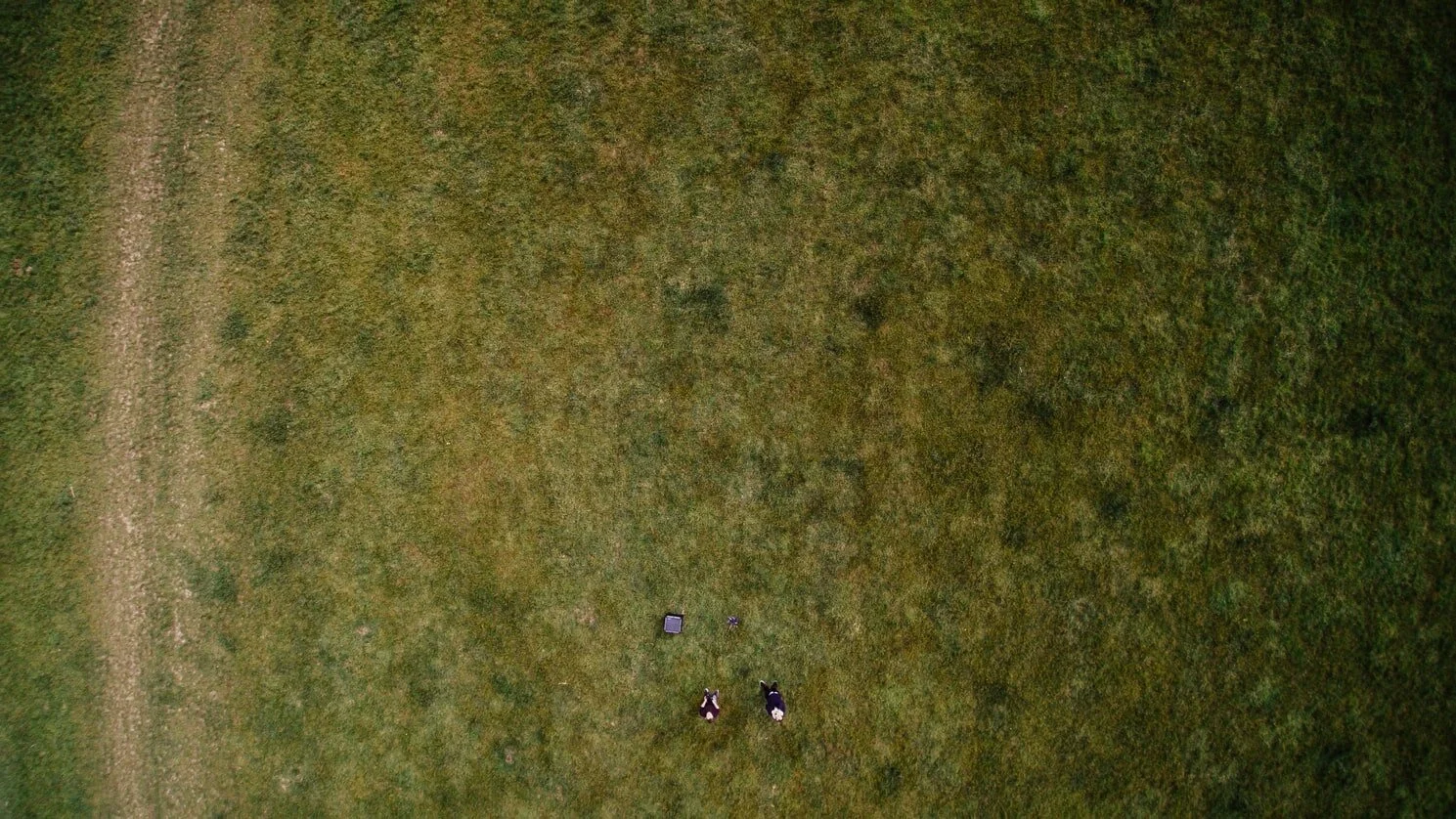
A while ago, I was standing in a field and realised I was standing on an anthill. I jumped around and in doing so, stepped resolutely into their existence. They scurried into action, racing around to fix their broken home and tend to the mess left behind.
I bring this up because it feels like humanity is an anthill, and it’s been stepped on. We’re now scurrying into action, tending to our changed conditions.

Know
A vexing problem for any person whose job involves handling or using information, is the corralling, filing, structuring, retaining and otherwise accessing and using that knowledge and information, at the right time, when it’s needed.
Whew, there is a lot to that long sentence.
It’s the last phrases that catch me out: the right time, when it’s needed. I think a word for it is “contemporaneous”.
The reality is, we live with just-in-time expectations, for delivery of inventory, or for finding knowledge. We learn in-depth when we need to, but rarely make time for it if it’s not immediately needed.

Dual
I can’t let July 1st, being Canada Day, go by without recognising my own deep Canadian-ness. For someone who is firmly and squarely Canadian, it’s hard to admit I’ve lived away from it for over twenty years.
I don’t think I’ll ever call myself Australian, even though I have dual passports. And yet I write Australian on the immigration card when I (used to) arrive in the country after an international trip.
Being more than one thing is accepted these days. We’re also asked to be ‘authentic’. Yet sometimes that’s a bit muddy when we can be two things equally.